The Lovecraft Anthology, Volume 2:
A Graphic Collection of H.P. Lovecraft’s Short Stories
-Stories adapted by: Jamie Delano, Dan Lockwood, Chris Lackey, David Camus, Dwight L. MacPherson, Chad Fifer, Pat Mills, Benjamin Dickinson, and Simon Spurrier
-Illustrated by: Steve Pugh, Adrian Salmon, Nicolas Fructus, Paul Peart-Smith, Bryan Baugh, Attila Futaki, Mick McMahon, Matt Timson, and Warwick Johnson Caldwell
-Publisher: SelfMadeHero
-Released: October 1st, 2012
-ISBN: 978-1906838430
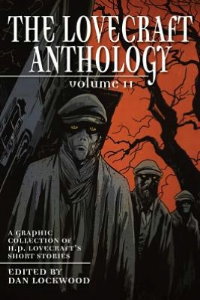
Repeating a successful formula is a commonplace practice in literature and film. However, it’s rare to come across a sequel that’s as good as the original. The second volume of The Lovecraft Anthology is one of those exceptional instances in which the follow-up doesn’t pale in comparison to its predecessor. Editor Dan Lockwood was behind the wheel again and the combination of top-notch adaptations and superb artwork was repeated, but the stories chosen for the second volume were diametrically opposed to those collected in the first volume.
While the first anthology contained the core of the Cthulhu Mythos, this time around the tales selected are some of Lovecraft’s less acclaimed stories. By taking them out of the context of larger collections, the narratives are allowed to shine without fear of being in the shadow of more famous classics. Pickman’s Model (arguably the best-known story in the anthology), “The Temple”, “From Beyond”, “He”, “The Hound”, “The Nameless City’, “The Picture in the House”, “The Festival”, and “The Statement of Randolph Carter” are the nine tales that make up the collection.
Just like the first time around, all adaptations manage to retain the crucial elements of each story even with an extremely reduced word count. Also, every artist brings a very different style to each story, helping to breathe new life into Lovecraft’s less-known work.
The first standout is “Pickman’s Model”. Adapted by Jamie Delano, illustrated by Steve Pough, and staged by Jon Howard, this graphic version of a narrative that was in turn based on visuals offers a lot of rich, detailed-oriented art while simultaneously allowing Pickman’s paintings to maintain the mysterious nature that they have in the story. In this case, it could be said the artists involved learned a lesson from HPL himself: that which you don’t show is sometimes even more important than what you do show.
The second must-read is “The Nameless City”. This is the most text-heavy of the nine tales, but Pat Mills did a great job with the adaptation and the words never overpower the art. The illustrations, done by Attila Futaki and colored by Greg Guilhaumond, grant the story a truly gloomy ambiance that, combined with the first-person narration and frame layout, give the story a cinematic quality that I have seldom encountered in graphic horror.
Two other notable adaptations are “The Hound” and “The Festival”. “The Hound”, adapted by Chad Fifer and illustrated by Bryan Braugh, is mostly grey, which gives it a very noir atmosphere, and the characters have facial expressions so varied and detailed they help carry the story almost without words. “The Festival”, adapted by Simon Spurrier and illustrated by Matt Timson, has the most varied and interesting lettering in the anthology and an omnipresent dark green background that works perfectly for the creatures that come out of the sea at night.
The Lovecraft Anthology, Volume 2, is another wonderful homage to the man whose work has had an immeasurable impact on modern horror. If you enjoy Lovecraft’s fiction, this needs to be on your shelves, right next to the first volume.
Reviewed by Gabino Iglesias