

The Angel Effect - An Interview with Dr. Jerry Linenger
DR. JERRY LINENGER ON NATIONAL GEOGRAPHIC EXPLORER’S THE ANGEL EFFECT
By Abbie Bernstein
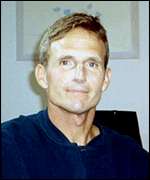
Retired NASA astronaut Dr. Jerry Linenger is waiting for the panel on National Geographic Channel’s EXPLORER series to begin. Linenger is scheduled to take the stage with journalist Terry Anderson, who survived almost seven years as a hostage in Lebanon, and Dr. Stphen Badylak and kidney transplant recipient Lucas Masella, who are here to discuss breakthroughs in regenerative medicine.
Linenger will talk about the EXPLORER episode THE ANGEL EFFECT, which concerns people who have had otherworldly experiences in times of crisis. Linenger is one of these people. The program airs at 10 PM on Tuesday, April 26.
Instead of waiting in the green room set up for talent at the Langham Hotel during the Television Critics Association Press Tour, Linenger is sitting at one of the long tables where reporters sit during the question and answer sessions. The sharpness of his attire aside, one might take him for a journalist biding time before the start of the next panel. Then he asks for a look at the complimentary copy of the book THE THIRD MAN FACTOR by John Geiger because, as he explains, “I’m quoted in it,” and it develops that he’s here as a speaker, taking in the audience perspective before it’s time for him to take the stage. Before the panel gets started, Linenger (who, upon being asked, says his surname is pronounced “linen,” like the fabric, plus “ger” with a soft “g”) graciously takes the time to give an exclusive interview.
“I had a couple shuttle missions,” Linenger relates, “and then I had a mission to the Russian space station Mir. The Mir mission was to get the U.S. and Russia working together, number one, and secondly, just for us to learn how the Russians operate in space. They’ve done a lot of long-duration space flight. We’re in that business now with the International Space Station, so it paved the way to the joint programs that we have today with Russia and the United States, Europe, Japan, all the countries working together. I stayed [on Mir] for about five months – myself, two Russians, only speaking in Russian, isolated, cut off from mankind for that time and we had a fire, we had a near-collision and failing life support systems and the pressure building up psychologically tough and started getting where you’re not really sure if you can make it to the end. You start counting the days – ‘Okay, can I make it for thirty more days?’”
During this period, Linenger says he saw his father, who had passed away some time earlier. “It’s strange, but it was totally soothing. I’m running on a treadmill one day [in the Mir station], I’m strapped down. Out of the corner of my eye, I could see my dad, just like you see me, out of the peripheral vision, four or five feet away, and he’s just there, and I just continued to look straight ahead. I didn’t hear a voice, but I heard a communication and I can only say that it wasn’t someone [audibly] talking to me, it was him talking to me, but not in words as we normally think of it. He said, ‘Jerry, you’re doing great, I’m proud of you, you always wanted to be an astronaut, you’re up here, you’re doing a great job, you’re going to make it to the end.’ So it was just a reassuring thing and it helped me get through that isolation and the difficulty and the life and death situations that kept arising time after time.”
The visitation came during a stressful time in the mission, but then, Linenger points out, most of his days aboard Mir were stressful. “We had the worst fire ever in space, as it’s been described, and it was one of the most dangerous flights since Apollo 13, so throughout the mission, we had failure after failure after failure. So it was a pressure cooker pretty much the whole time and this was later in the mission, at about the four-month point, and it probably happened on three different occasions, where I started looking forward to getting on the treadmill, even though it’s a painful thing normally to strap yourself down with seventy-kilogram load plates, it’s hard to run, but I looked forward to it and I would hope that he was there to sort of give me some guidance.”
As far as Linenger knows, neither of the cosmonauts had any experiences resembling this. “I actually would go in a module, by myself, and it was very emotional, so I didn’t really want them coming in, and I didn’t really hear of that [type of visitation] with anyone else. Now, the book – THE THIRD MAN FACTOR – describes polar explorers that have this sensation. They fall down, they give up, and then someone comes and taps them on the shoulder and says, ‘Keep going, you can make it.’ Lindbergh, flying across the Atlantic, felt fireflies around him, and they kept waking him up when he was about to crash into the ocean, when he was about to fall asleep. So it’s time and time again you see that other explorers have had the same phenomenon occur to them in extremely different ways. Some people just, it’s a coping mechanism, other people, it’s a guardian angel.
Asked if his father made any specific suggestions, Linenger chuckles. “I think he had the wisdom [for] not giving advice, he’s not the astronaut. It’s kind of more like, ‘Jerry, I’m proud of you as my son. You can do this.’”
The experience was pretty definitive for Linenger, he adds, in that he doesn’t feel that it was either a hallucination or possibly an attempt at communication by an extraterrestrial entity. “I don’t think I’ve ever been asked that,” Linenger says of the latter possibility. “No, it was my dad, it was him and I have no doubt that it was not an alien or anything else. People say, ‘Do you see UFOs?’ The answer to that is yes, I saw a UFO while I was up – I saw unidentified flying objects, I saw stuff I wasn’t sure what it was, but I never had anything strange happen as far as someone knocking on the [space station] door or anything like that. And this wasn’t strange in any sense. This was a very soothing – it felt familiar. It was my dad there to help me and it wasn’t a scary thing – it was a wonderful thing to happen, and it helped me get through the end of that mission successfully.”
Did this alter Linenger’s belief system in any way? “I think it solidified my beliefs,” Linenger replies. “Looking down at the Earth in general – to me, you’re looking down at God’s creation and it’s an incredible sight. I spent five months looking down at it, so it just reinforced my belief. I didn’t get struck by lightning – even that experience, I wouldn’t describe it as a religious experience. It was more humanity, the thread of our DNA continuing generation after generation, but in this sense, in a more physical sense.”
Straying from the spiritual issues for a moment, how much detail on Earth can be seen from space? “I could see the Mackinaw Bridge in Michigan,” Linenger says. “I could see the pyramids. It looks like a little dot, and you have to look kind of hard right where the Nile does sort of a backwards question mark. The Great Wall of China, everyone thinks you can see that, because someone said that in Trivia Pursuit, but I’ll tell you, there’s so much clear-cutting of forest in Mongolia, the smoke comes down and it obliterates the landmark, and you cannot see the Great Wall of China. It’s like seeing the lights of Beijing at night – it’s just a totally polluted blight on the Earth. So you can see detail – on the other hand, I look back and I’m seeing the United States in its entirety and I’m seeing down to Panama and the curvature of the Earth in the background. So it’s pretty remarkable.”
Being part of a NATIONAL GEOGRAPHIC special pleases Linenger, as he’s been a fan of both the channel and its parent publication all his life. “Back to the magazine as a kid, that kind of inspired some of those dreams. I always wanted to be a world-class geographer, and that was one of my goals on that mission, and I had five months. I took ten thousand photos of the Earth when I was there, and I don’t have a photographic memory, but when I see a map, I flash back very clearly on what it looked like from space. I get that flashback. So I think I am a world-class geographer at this point. I know the subtleties of our planet – fault lines, algae blooms, shifting tectonic plate movements – you can see how India somehow slammed in to make the Himalayan Mountains, you can see that from space. Not in real time, but using your scientific knowledge of what happened, you can see, ‘Yeah, that theory looks right.’ Flying over the planet two thousand orbits, I kept looking down, I picked out a place in Michigan that I thought was a remarkable place on the Earth, and my wife and I live there with four children. I’m sort of semi-retired. I do a little NBC News space commentary, written a couple books, been involved in documentaries, help out, so kind of second half of life, doing things a little bit differently.”
Has talking about his experiences aboard Mir brought Linenger into contact with a peer group? “Not in a formal sense,” he explains, “but I’ve been invited to become a member of the Explorers Clubs and things like that, and I think other people relate similar things. Terry Anderson’s doing another National Geo show and he was in isolation – he was a prisoner for years – I talked to him, so I’m open to talking about it. His experience was more of a religious thing [for] him, where he felt his prayers were being answered, but [he did not experience] a physical presence. So it’s opened up a kind of interesting dialogue with people, and I’m not afraid to talk about it. I’ve retired from NASA. I hope to fly hopefully to Mars some day, twenty years from now, I’ll keep my foot in the door, but it’s not imperiling my career, if you will, by talking about it, and I’m comfortable talking about it.”
Was there ever a time when Linenger feared that discussing what he saw might endanger his NASA work? “Yeah,” he replies. “I definitely kept it quiet – you know, you’ve got to have sort of ‘the right stuff’ [to be an astronaut] and you want other flights, but after I retired, I wrote my own book called OFF THE PLANET and during that, it was sort of a cathartic thing, and then [THIRD MAN FACTOR author] John Geiger got wind that I may have had a similar experience to the other people he was studying, and then there’s some assurance. When you see that other people had the same thing, I’m not ashamed to talk about it. It’s a human thing, and the more I reflect on it, the more I know it’s a wonderful human trait that we can beckon people from our past and it makes me feel a bit more eternal myself. Maybe my children can beckon me and we never really pass on.”
The state of the NASA program these days causes Linenger concern. “I’ll tell you, it’s a really low point in the manned space program. For the first time since 1963, we don’t have a manned vehicle up there. The shuttle’s going to get retired at the end of this year and we have no replacement vehicle. The just took half of NASA’s budget and gave it to the private companies. I’m all for private space stuff, but I like it private – I don’t like it being public funds. I think the public funds should be used for state-of-the-art advancements, pushing the envelope, building a vehicle that can get you to Mars, and not regressing to building a 1965-type vehicle that can barely orbit the Earth. So it’s a very pessimistic time, actually, I think, and it’s very disturbing that we’ve given up our leadership in the manned space program.”
Linenger’s father died before Linenger was in NASA. “I was a naval officer and I wish he was around during that. He would have been proud. But he always knew that [becoming an astronaut] was my dream in life. I was probably fourteen, looking up at the moon – I said, ‘I want to do that some day.’ So Dad knew that that was something I wanted to do. I guess the bigger or a broader story was – my mom’s still with us down here on the planet – but I’m not sure how significant it was that it was my dad. It was more that someone was there to help me. You’re never really alone. You can beckon somebody and I sort of hope the same thing with my kids – I’ve got four children and I hope somewhere down the line, I’m still watching over them and they can find me if they’re isolated, if they’re in danger, that sort of thing.”
Interview By Abbie Bernstein

Abbie Bernstein
Latest posts by Abbie Bernstein (see all)
- Future Man Creators - Kyle Hunter & Ariel Shaffir - Exclusive Interview! - 12/14/2017
- Denis O’Hare On “Edgar Allan Poe: Buried Alive” - Exclusive Interview! - 10/27/2017
- Jason Isaacs Exclusive Interview - On Star Trek: Discovery - 10/05/2017
- Jon Lomberg “The Farthest” - Golden Record Spacecraft Voyager - 09/12/2017


-
Richard Demarco
-
judie steele
-
Theresa Bane